
If you work in the travel industry, we’re sure that you’ve already heard a lot about this association. But if you still didn’t get it from its full name, we’ll make it easy: this is IATA, a major entity that was founded in 1945 in the Cuban capital, Havana, and has become a global reference when it comes to commercial aviation.
Over the past eight decades, IATA has done a lot to its industry: it has promoted standardized tickets, airport codes, innovation and sustainability initiatives, and much more. Here, we are going to dig deeper into this wonderful entity and help you understand the many ways with which fliers and professionals interact with it.

What is IATA, after all?
Formally known as the International Air Transport Association, it is the global trade association for commercial airlines, that is, carriers that cover both freight and passenger flights. Nowadays, IATA is present in 126 countries and territories and has 350 members. It operates with over 80% of the global air traffic and improves it by developing standard practices and procedures.
IATA’s goals range from making flights safer to lowering costs. It also creates standards that aim to simplify processes, achieve sustainable goals, and invest in comfort and efficiency for passengers around the world. The association ends up benefitting airlines, travel agents, customers, ground handlers, and everyone else who works in the air travel industry.
Historical context and background
Even though IATA is 80 years old, the first initiatives towards standardizing and improving the air travel industry are even older. In 1919, the International Air Traffic Association was created with focus on technical and legal issues. Specialists say that it helped a lot in defining safety standards as well as a legal framework. However, that was not enough.
In 1944, the International Civil Aviation Organization (ICAO) came to life thanks to an intergovernmental body as an attempt to improve the original entity. It aimed to strengthen economic regulation, manage air traffic as a whole, and address issues when it comes to itineraries, rates, schedules, and revenue obtained from connecting flights. But there was still room for improvement.
IATA as we know it was finally founded in the following year. 57 airlines sent representatives to form the association and address problems in the creation of tariffs and fare rules. They would also work on revenue allocation, global scheduling for flights, and several other issues in this industry. The association would only grow and become stronger and influential ever since.
ICAO vs IATA (and FAA)
Before we proceed, there’s an important clarification to make: ICAO and IATA have coexisted since the latter was formed. ICAO defines standards for its members, such as cross-border procedures and airspace boundaries, while IATA focuses on defining rules like baggage allowances and fare policies. Two different approaches to continuously improve the air travel industry.
Parallel to those, we should also mention the Federal Aviation Administration (FAA). This is a US entity that oversees civil aviation in the country, so it works on air traffic management, procedures for aircraft manufacturing and maintenance, staff certification, and airport facilities compliance to name a few. By the way, FAA also handles commercial space transportation.
As you can see, those organizations work independently from one another; they work on different fronts towards the same goals of improving their industry and making it simpler, more productive, and more efficient. They have become highly important partners for airports and airlines to make this means of transportation the global reference it is today.

How does IATA contribute to aviation?
Now that we’ve learned a lot about the history of this association, we can move on to the many ways in which is has helped the air travel industry become safer, more sustainable, and more efficient.
What is IATA code?
The short answer is bringing a few examples: LAX for the Los Angeles International Airport; FCO for the Leonardo da Vinci – Fiumicino Airport that serves Rome; and HND for the Haneda Airport that serves Tokyo.
IATA airport codes were created to try and organize air travel. They are a simple identification system that everyone, whether passenger, airport staff member, or travel agent, can easily recognize. That’s why those codes are present everywhere when we use air travel – baggage tags, boarding passes, flight schedules, plane tickets, and much more.
Now, it is important to say that IATA regularly reviews the currently assigned codes. This regulation is important to make sure that all airports have a unique code, which is especially challenging in cities that are served by more than one. This way, the association can make sure that its naming system is still serving its purpose.
Cargo regulation
Air freight implies transporting all kinds of goods from point A to point B in a way that minimizes damage and delays. IATA works hard to set compliance standards to its members; their goal is to encourage them to devise new technologies and research new solutions to accomplish that task more efficiently.
IATA has already set specific standards for transporting medical items, dangerous goods, perishables of all kinds, and even live animals. Besides that, the association has started several projects that address different problems of the current air freight industry. Here are some of them:
- Cargo Border Management: makes global trade and logistics simpler thanks to IATA’s collaboration with the customs department, international organizations (ICAO, UN, WCO etc.) and national regulators.
- Cargo Operations: offers guidance on how to properly handle goods in airports, makes recommendations for building cargo facilities, and regulates warehouse activities.
- Cargo Sustainability: develops and executes projects to address climate change, gender imbalances, and many other issues in this field.
- Digital Cargo: drives innovation and increases connectivity as a way to make manual processes more efficient. This is actually a collective of initiatives such as e-freight, Cargo Connect, ONE Record, and Interactive Cargo.
Passenger experience
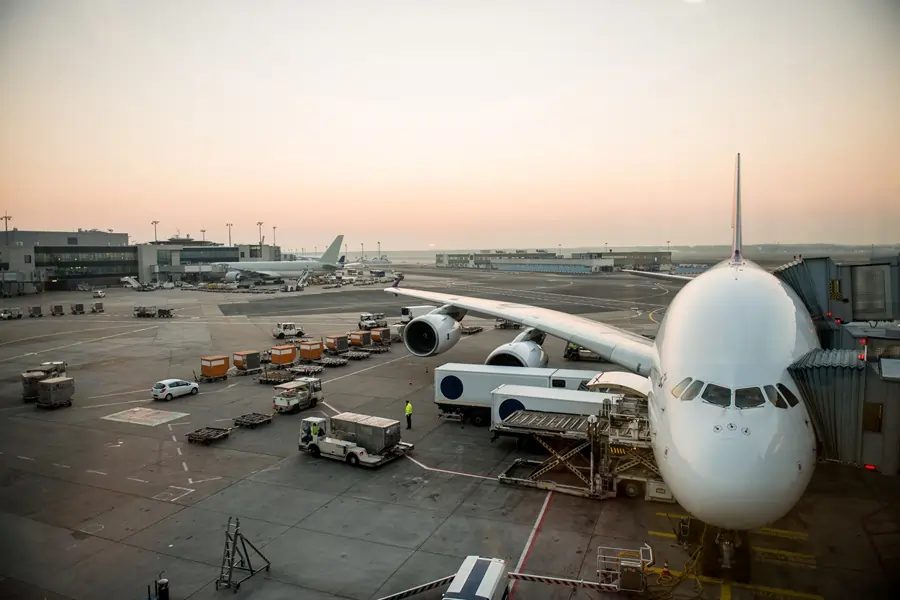
It takes only a few minutes to realize that airports are crowded. More and more people are traveling by plane every year, so we can easily figure out that airports are becoming more and more difficult to navigate. IATA has anticipated that movement by working with other organizations towards establishing new standards to accommodate those new volumes.
The One ID project is a great example of that. It implements a contactless biometric recognition technology that doesn’t use paper at any step. This way, it becomes easier for passengers to check in and board and, as a consequence, each one takes less time at lines in the airport.
Distribution, payments and taxation
IATA is also working to improve customer experience when shopping, whether before or during the flight. The New Distribution Capability (NDC), for example, is a data exchange standard that allows airlines to deliver rich content to customers. Over 100 airlines are already adopting NDC, as well as several Global Distribution Systems (GDSs), each one at its own pace.
Parallel to that initiative, IATA is working on regulating connecting flights, on implementing dynamic rates, and several other aspects of transactions in the industry. The main goal is to offer new technologies that enhance customer experience while providing new opportunities for airlines to try and increase their profit margins for every flight.
Safety and security
If airplanes are the safest means of long-distance transportation, a big part of the credit must go to IATA. Nowadays, it is working on operational safety (cabin activities, runway procedures, in-flight processes etc.), corporate safety (risk mitigation), safety audit (to assess how new policies are being enforced), customer feedback collection, and data management.
When it comes to security, we can mention that the association works closely with governments and other international associations to develop and implement new standards focused on addressing potential threats and vulnerabilities. Screening and detection technologies, data sharing standards, and solutions to cybersecurity issues are only some of the initiatives.

Sustainability
While it is impossible to eliminate the environmental impact caused by air traffic, IATA works hard with airlines to minimize it. The association has signed a resolution committing to reach net-zero carbon emissions by 2050. To that end, it has created multiple plans which create a major strategy aimed at decarbonizing its operations:
- Sustainable aviation fuel that minimizes emissions
- Programs for carbon offsetting and capture in aviation
- New technologies including electric and hydrogen engines
- Better and more efficient infrastructure and operational
Operations and Infrastructure
Since nothing is perfect, IATA’s work has a few sensitive points too. Airlines are always trying to increase operational efficiency, so the association helps them with standards for baggage services, ground operations, pilot and maintenance technician training, fuel management, and technical operations. While it brings tighter allowances, it also helps lower air travel’s overall cost.
You may also like to know that IATA has an Innovation Hub, where you can participate in the association’s projects. Hackathons give developers room to show their ideas; Accelerate@IATA connects airlines with startup service providers; and the Think Tank strives to foster collaboration to work on new initiatives.
Services and Tools
IATA wants to benefit everyone involved in the air travel industry, not only companies: airport, travel agents, freight forwarders, ground handlers, and many others. Here, we’re going to list some of the most prominent ones:
- Accreditation for travel and cargo agents: the association offers a community of over 70,000 members working from 207 countries and territories. IATA certifications work as proof that the service provider has a great overall track record.
- Certifications: IATA’s services aim to teach professionals how to follow their standards. You can obtain certification to make shipments with fragile and/or perishable goods, prove that you meet industry standards in multiple segments, and many others.
- Data & statistics (DDS, surveys): By enhancing the data flow, IATA can collect massive amounts of data and help airlines address any possible problem with informed decisions. Airlines and travel agents connect with that database via APIs.
- Financial services (BSP, CASS, ICH, exchange rates): IATA’s financial instruments include a billing and settlement plan, cargo settlement systems for cargo airlines, a system for debt collection, and exchange rates to support interline billing and establish tariffs.
- Compliance and Consulting: IATA’s vast experience allows it to help airlines comply with the existing regulations and standards, as well as understand the market, optimize operations, and enhance air travel businesses.
- Training, manuals, and standards: everything that IATA has ever created for the air travel industry can be accessed as a series of guidelines and best practices. Over 80 manuals on those topics have already been written and published.
Recent IATA projects
Last, but not least, we can mention several initiatives which are directly aimed at IATA’s goals. They give us a clearer vision of how this association works and what improvements it brings to the air travel industry around the world:
- Sustainable Aviation Fuel (SAF): IATA created a registry system to track SAF deliveries and emission credits. It organizes how airlines acquire and consume SAF and, later, how they claim CO2 reduction without double counting.
- TrackZero: This platform allows airlines to report CO2-related data and already has 82 carriers as members. The goal is to report total emissions year after year as well as the growing mitigation effect caused by the use of SAF.
- Data-driven safety: The Global Aviation Data Management (GADM) program aggregates several big-data streams from airlines in order to identify signs of possible problems. This way, instead of simply creating new rules, IATA can use big data to detect patterns before they become an issue.
- Digital identity: IATA is also working on the customer front, with pilot projects that allow passengers to go through the entire procedure with nothing but a digital ID and biometric recognition. This initiative is connected to the OneID project and aims to make passenger flow faster and easier.
- Cargo Digitalization Leadership Charter: this program is backed by several major carriers which agreed to five principles of data-sharing and interoperability. The charter uses the IATA One record standard for data exchange following rules of AI ethics and cybersecurity.

Conclusion
As you can see, IATA works hard to understand air travel and devise solutions and standards to address its problems. While it is far from finished, the association has already helped this industry in more ways than we could ever imagine. It has become a powerhouse when it comes to knowledge and standardization.
Nowadays, IATA is turning to topics such as digital transformation and climate goals as part of its efforts to understand what the industry needs and striving to obtain it. To that end, it makes abundant use of technologies such as data analytics and artificial intelligence. The association has become a cornerstone of global air travel’s future as we know it.